Formula BMW USA
2004 – 2010 4 min read
My chase for Formula 1
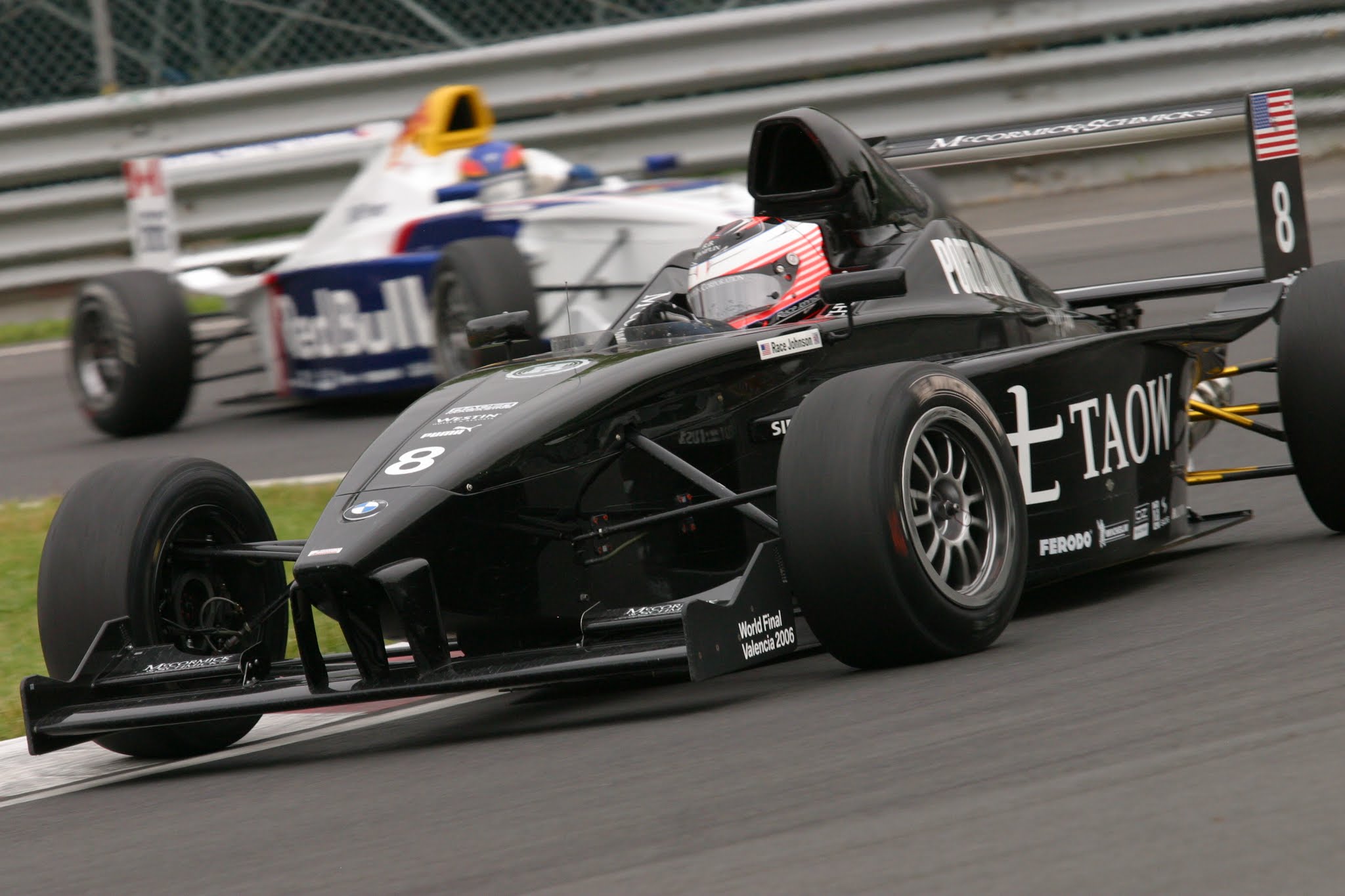
I grew up racing karts around Portland, starting at 12, and by my early teens I was racing nationally. Then I got the call: I'd been picked as one of 12 drivers from North America to fly to Valencia, Spain and earn my formula-car license. I was 15 and went on my own. That was the start of my open-wheel career.
Formula BMW was built to bring the next generation of Formula 1 drivers up the ladder. We raced on the same weekends as F1 and Champ Car, on some of the most iconic tracks in the world. I was 16 and one of the youngest on the grid. I probably had no business being there, but I was.
The seasons
I ran two Formula BMW USA seasons with HBR Motorsport Team USA, in 2005 and 2006.
The highlight was the Grand Prix of Denver in August 2005, where I finished P3 as a rookie. It was my only podium in the series, and standing up there is still one of my favorite memories from the whole career.
We also ran 4 F1 weekends as the support series across those two seasons, at Indianapolis Motor Speedway for the United States Grand Prix and at Circuit Gilles-Villeneuve in Montreal for the Canadian Grand Prix. Racing on those tracks the same weekend as F1, as a teenager, is something I'll never forget.
The stat I'm most proud of came in 2006. In June, BMW's press release pointed out that I was the only driver in the field who had finished every race so far in the top 10. I wasn't the fastest guy out there, but I was consistent. Later that year I took pole at Mosport and finished 8th in the championship, up from 10th as a rookie.
In December 2005 I also went to the first Formula BMW World Final in Bahrain, driving for Meritus. 34 drivers from 15 nations were racing for a test with the BMW Sauber F1 team. My weekend ended early (another driver drove into me in a heat race and a medical call kept me out of the main races), and Nico Hülkenberg won the whole thing on his way to F1. His main rival that weekend was Sebastien Buemi, who later raced in F1, won Formula E and won Le Mans.
Across those two seasons I also raced against Robert Wickens, Simona de Silvestro, Stefano Coletti and James Davison, and a lot of that field went on to F1 and IndyCar. I shared the track with Alexander Rossi at a preseason test.
The sponsorship side (where my sales started)
Racing at that level isn't cheap (the cars, the travel, the team), and someone has to pay for all of it. From 16, a lot of that someone was me.
So I learned sales the hard way. I raised over $500K in sponsorship from Portland-area brands, which meant convincing a local company to back a kid who wanted to get to Formula 1, then making sure they got something for it.
I sold the experience, not the logo on the sidepod. Sponsors brought their top clients to the races, and I'd give them a behind-the-scenes tour of the car, the garage and the track so the weekend felt like something they couldn't get anywhere else.
That's where my sales skills started, and it's where a lot of Pixly started too.
The decision
Senior year of high school is when it got real. Racing full-time was the dream, but the next rung up the ladder (F3, GP2, eventually F1) was a lot more expensive than the last. I went to the 2007 preseason tests with HBR, then the money ran out and I sat out the season.
So I chose college and went to the University of Arizona, Eller College of Management. Hard call. Still the right one.
I did try one real comeback in 2010 and 2011. I got cleared to race Indy Lights, and it ended when the money wasn't there. At one point I stood down a test because I couldn't let my parents put money forward that we didn't have (I ran Pixly the same way, with no outside money).
What it gave me
Racing taught me a lot at a young age, and it shaped who I am and how I run a business. It's a driver-led sport, but still a team sport, and with a crew of 5 (mechanics, engineers and driver coaches) clear communication was super key so they could make the right changes.
You learn to perform under pressure, with hundreds of thousands of dollars on the line, and to compete hard but clean. And in racing there's no one else to blame. If the result is bad, it's on you.
I don't race anymore, but those were some of the most fun and challenging years of my life.