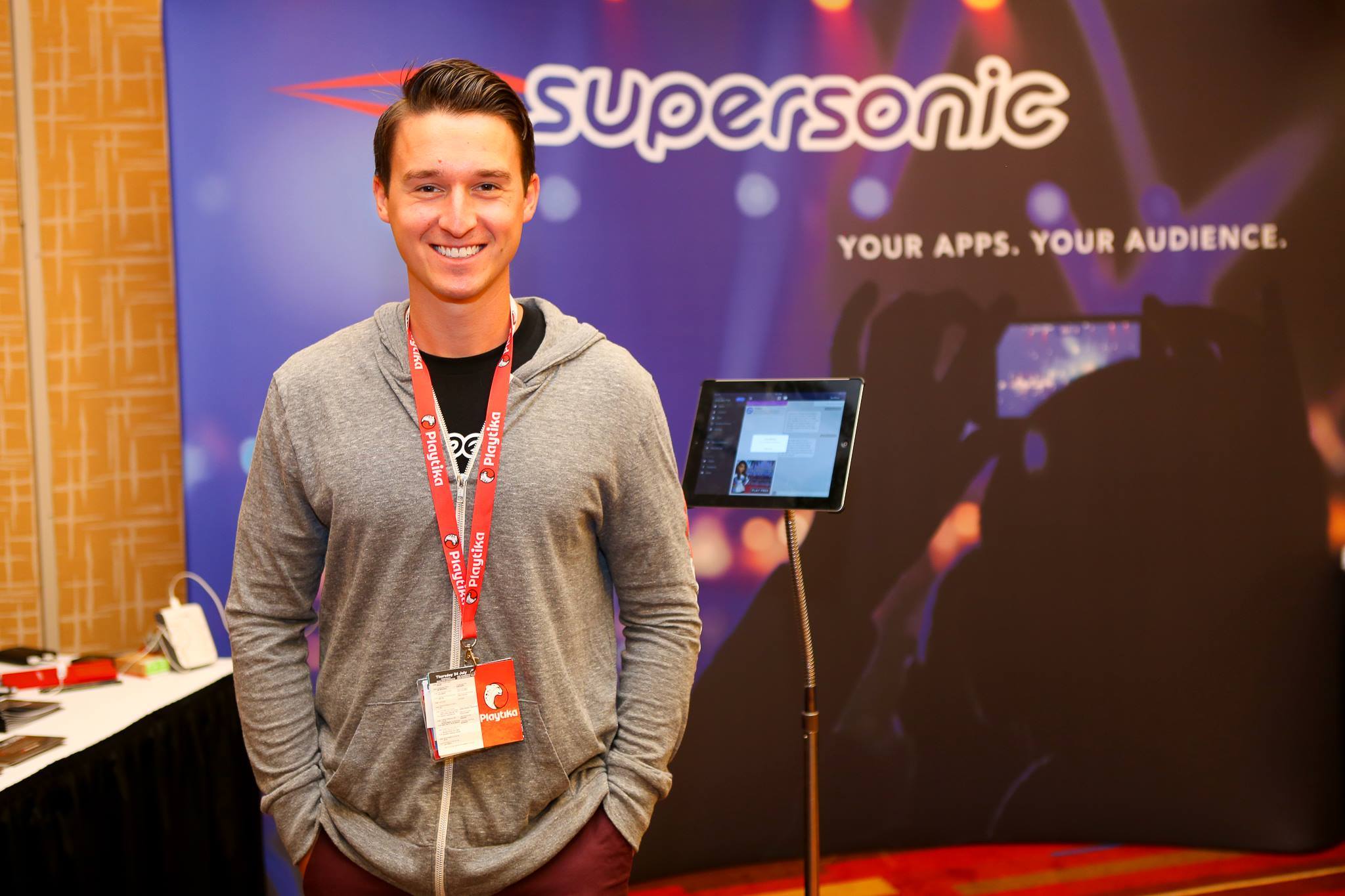
 Supersonic
Jul 2013 – Jan 2016 4 min read
My two and a half years at Supersonic
I left Pocket Change in early June 2013, and Tim O'Neil introduced me to Damon Marshall, VP of Business Development, Publisher Services at SupersonicAds. Damon's offer was simple: "The experience you got at Pocket Change will transfer well." What sold me was the commercial freedom, including room to offer publishers revenue guarantees. I started on 8 July 2013 as a Business Development Manager.
When I joined, Supersonic was the ad network that monetized websites and Facebook games, a name most clients didn't know. The product was moving from web to mobile and we were about a year behind our competition, but I believed in the small San Francisco team. We built our mobile MVP super fast and quickly began contacting small and medium developers, and two years later we would become the leading mediation platform for rewarded advertising (mediation lets an app run several ad networks and serve whichever pays most).
What I actually did
My job was publisher business development. I closed and grew publishers by fitting Supersonic's products (offerwalls, rewarded video, interstitials and mediation) to each app's category and how its users behaved, and the work went well past closing the deal.
I built automated outreach and email cadences from scratch to reach more developers, and tested them carefully. Once a developer signed I set up the account, sent the SDK and instructions, issued app keys, and optimized the offerwall again after each Apple review. I worked through conversion rates, revenue share negotiations and the occasional App Store rejection, and helped with SDK integrations and ad placements to lift revenue per daily user (ARPDAU) and retention, feeding what I heard back to our product and account teams.
I was always scouting apps: Traffic Racer, Cargo King, Monster Rush, Basketball Kings, Bingo Pop, Major GUN. When I found a promising one in the App Store I'd forward it to my work email to follow up, and the pipeline never really stopped.
On the revenue side I ran double-credit promotions to boost developers' earnings, pulled eCPMs (what advertisers pay per 1,000 ad views) by country from our internal API when a partner needed answers, and proposed game publishing deals built on revenue share. The work was hands-on, technical and scrappy.
The merger
Supersonic and ironSource announced their merger in September 2015, and TechCrunch covered it as a big consolidation in mobile ads. Combined, the two companies covered 1 billion monthly users and were projected to generate $450 million in sales that year. For us it meant going from about 150 people to 850.
Gil Shoham, Supersonic's CEO, put it this way:
We go back years and know each other well and have very similar DNA and culture and share the same vision. Both companies were founded in Israel, both were profitable, and the market was demanding full-stack solutions. Supersonic was strongest on video. ironSource was best at mobile distribution and monetization. Together, the unified SDK would offer mobile video, offerwall, interstitial, display, and mediation support.
That autumn I ran a lot of training sessions teaching new employees mobile monetization and rewarded advertising, and in January 2016 I flew to Tel Aviv for the merger party. It was a huge shakeup and many of my coworkers moved on during the integration, but our close-knit team made it into the new, much larger organization.
The results
Over two and a half years I generated more than $10 million in revenue and ranked among the top business development performers globally. I'm proud to have been part of Supersonic's growth from ad network to the leading rewarded video mediation platform, going into the ironSource merger, one of the most notable deals in mobile ad tech at the time. That merger later paved the way for Unity's acquisition of ironSource, but the foundation was built through daily conversations, integrations and wins with developers.
What I took from it
Supersonic sharpened my instincts for spotting trends, building product feedback loops and finding creative ways into new markets. I spent a lot of time in the App Store and Google Play looking for profitable verticals, and some of the best were outside games (VoIP and utility apps were two we went after). I also learned how to turn what I heard from developers into product improvements, and how to build outreach systems that actually scale.